|
|
Solar Radiation Management (SRM), or solar geoengineering, refers to emerging climate techniques aimed at reflecting some of the sunlight back into space to reduce
global temperatures. Understanding the mechanisms and potential impacts of SRM, as well as the broader field of solar geoengineering, can refine climate models, leading to more accurate projections of their efficacy and risks. SRM has the potential to reduce
climate impacts globally, yet it also carries significant risks and uncertainties.
|
|
|
This collection highlights recent research in this area from experts in the field, including:
|
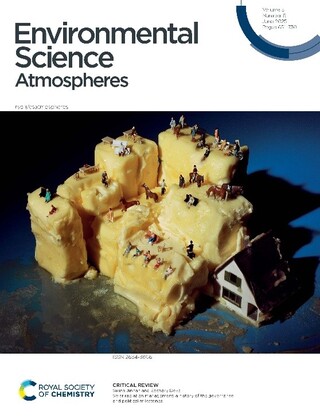
The cover artwork from Issue 6 is from Sikina Jinnah and Zachary Dove related to their critical review on a history of the governance and political milestones
of SRM (Image produced by Professor Jorge Menna Barreto, Art Department, University of California Santa Cruz, USA in dialogue with Sikina Jinnah from Environ. Sci.: Atmos., 2025, 5, 656.)
|
We hope that you enjoy reading this collection of articles. Please get in touch if you have any questions about this themed collection or want to contribute to the
growing work on solar radiation management.
|
With best wishes,
Environmental Science: Atmospheres Editorial Team
Royal Society of Chemistry
www.rsc.org
|
 Submit
to Environmental Science: Atmospheres Submit
to Environmental Science: Atmospheres
About
Environmental Science: Atmospheres
|
Environmental Science: Atmospheres is a gold open access journal led by Neil
Donahue (Carnegie Mellon University) that gives a space for the wider environmental science and climate change communities to come together.
-
We have an impact factor of 3.5 and are indexed in Scopus, the Web of Science Emerging Sources Citation Index and Directory of Open Access Journals (DOAJ).
-
We offer rigorous peer review with typical times to decision of under 37 days.
-
As part of our commitment to ensuring an open and fair peer review process, we offer the option of a transparent peer-review process, whereby the editor’s decision letter, reviewers’ comments and
authors’ response are published alongside the article.
|
Environmental Science: Atmospheres is complemented by our companion
journals, Environmental Science: Nano, Environmental Science: Water Research & Technology,
Environmental Science: Processes & Impacts and Environmental Science: Advances. Find out more about these journals at
rsc.li/envsci.
|
We have sent you this communication because we believe it will be of interest to you. If you would prefer not to receive emails of this type in future from
Environmental Science: Atmospheres, you can let us know by replying with an email entitled ‘No emails from
Environmental Science: Atmospheres -
click here to reply. Please see the Royal Society of Chemistry’s
Privacy Policy for further information.
|
|
|
|
Unsubscribe
This Royal Society of Chemistry journal may like to send you further notifications like this. If you prefer not to receive emails in future from this journal, you can
unsubscribe immediately.
You can
unsubscribe from all future email messages from the Royal Society of Chemistry. You may still receive service emails relating to your Royal Society of Chemistry membership, articles submitted for publication, purchases, or conferences. See our
Privacy Policy.
Contact us
The Royal Society of Chemistry is a charity registered in England and Wales. Registered Office: Thomas Graham House, Science Park, Cambridge CB4 0WF, United Kingdom. Registered Charity Number: 207890
© Royal Society of Chemistry 2026. All rights reserved.
|
|
|
|
|